Utilities Tech Outlook Weekly Brief
Be first to read the latest tech news, Industry Leader's Insights, and CIO interviews of medium and large enterprises exclusively from Utilities Tech Outlook
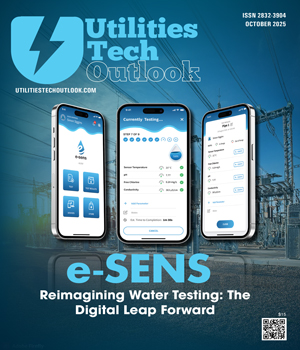
Traditional water testing still relies on manual reagent mixing, timed reactions, and color matching, repeated for each parameter. With experienced technicians retiring and fewer recruits trained in these complex procedures, the process is becoming harder to sustain. In the field, where time and resources are limited, this outdated routine is no longer practical. e-SENS is rethinking this analog ritual with a new generation of handheld instruments designed for accuracy, speed, and, most of all, simplicity. Its ROAM device delivers lab-grade precision without requiring users to handle chemicals or execute complex workflows, capturing multiple parameters in about fifteen minutes, all at the push of a button. Paired with a mobile app for real-time data logging and compliance reporting, ROAM makes water testing smarter, faster, and effortlessly scalable. “You no longer need a trained chemist to run reliable water tests. ROAM was built to be intuitive – anyone can use it,” says Richard B. Brown, CEO. Lab-Grade Water Testing in the Palm of Your Hand ROAM transforms a small water sample of about 15 ml into a powerful snapshot of as many as 23 critical quality parameters. It operates using a recyclable microfluidic cartridge preloaded with buffers and calibration solutions and capable of supporting up to 100 tests. Internally, the sample is routed through precision-engineered microchannels across a silicon sensor array engineered to detect specific analytes. Other efforts to modernize water quality testing employ macro-size probes and one-time-use consumable devices that require more manual processing steps and generate considerable plastic waste. They also lack the ability to upload data in real time, or to include test data from other sources in the record. The e-SENS ROAM supports both app-based analytics and a full-featured database that enables system-wide visualization and data-driven management. Despite its technical efficiency, ROAM is remarkably small at just 25 cm long and weighing only about a kilogram. With each test, it automatically calibrates results, time-stamps, geotags, and securely transmits encrypted data to the cloud. The device flags anomalies in real time, while built-in analytics let users visualize trends and set threshold alerts for critical parameters such as residual disinfectants or corrosion indices. Through its paired mobile app, users can log compliance data, integrate third-party information, and monitor historical trends. This data ecosystem does not stop at the app. A dedicated API makes it easy to integrate ROAM with existing digital monitoring systems, streamlining workflows and reinforcing regulatory compliance. The app is not only the simplest data collection tool around, it is scalable for any water parameter that needs testing. The e-SENS software can generate reports, track routes, and maintain a level of compliance in real-time that few other tools have the ability to do.
Power grids today face unprecedented scrutiny. As regulatory requirements intensify and system complexities multiply, utilities must detect, interpret, and report every electrical disturbance with absolute precision. Against this backdrop, accurate, time-aligned data is essential for compliance and operational confidence. Since its inception in 1983, Mehta Tech, based in Iowa, has delivered reliable, highly engineered solutions to meet this challenge head-on. The company specializes in disturbance monitoring, helping utilities capture what happens inside substations during unexpected events. Often described as the “black box” of substations, its systems provide a continuous, forensic record of grid behavior that utilities can rely on when investigating faults or proving compliance. This engineering focus underpins every aspect of the company’s operations. All products are designed, built, and supported in the U.S., including the printed circuit boards. Unlike larger vendors that stretch across multiple product categories, Mehta Tech’s strength lies in delivering depth in disturbance monitoring with clear insights during the grid’s most critical moments. This narrow focus allows the team to refine their technology continuously, producing systems tailored to real-world conditions rather than generalized solutions. Data Integrity at the Heart of Every System At the core of Mehta Tech’s portfolio is the TRANSCAN platform, which combines three functions in one: digital fault recording, phasor measurement, and dynamic disturbance recording. It monitors voltages, currents, frequencies, and power quality with high-speed sampling, providing detailed information to capture subtle anomalies that might otherwise be missed. Executives liken this to recording a movie rather than taking a snapshot, giving utilities a frame-by-frame view of events as they unfold. Crucially, this recording does not pause during an event, giving utilities complete visibility before, during, and after disturbances. One of TRANSCAN’s defining features is its time accuracy across multiple devices. For utilities managing hundreds of assets, synchronized timing is essential to understanding cause and effect across the grid. “If you have 200 devices in your networks, you shouldn’t have 200 different timestamps when an event occurs. We give our customers a unified, accurate picture of exactly what happened and when,” says Dan Harder, Director of Sales and Business Development. The platform also extends monitoring beyond protective devices, capturing voltage inrushes, current reversals, and other dynamics often hidden from conventional systems. The effectiveness of this design is evident in real-world utility applications. In one case, a utility faced repeated equipment failures that standard troubleshooting could not resolve. Mehta Tech’s data revealed upstream load switching as the culprit. Company President Tony Ranson personally traveled to the site, spending three days on location to restore service. This is just a small sample of the service ethic, which is central to the company’s culture. Such experiences form part of Mehta Tech’s institutional knowledge. Over time, its systems have repeatedly uncovered patterns that were invisible in real-time but critical for preventing future incidents. This ability to provide a continuous “black box” record has become equally valuable for long-term planning and system upgrades.

Scott Bordenkircher, Director, Forestry & Fire Mitigation, Arizona Public Service - APS

Ivon Louis-Letang, Energy Manager, Eversource Energy

Awet Haddis, Project Manager III, Puget Sound Energy

Cannon Lord, Manager, Data Engineering, Summit Utilities

Marcus Johansson, Senior Executive, Wildfire Mitigation, Digital Transformation, Grid Modernization, Xcel Energy
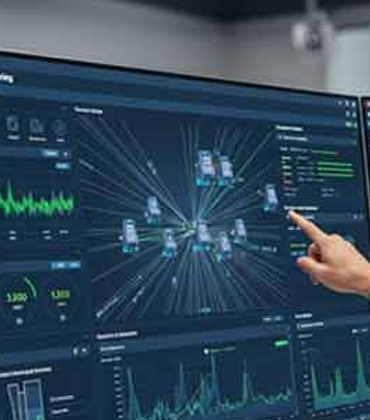
Advanced monitoring technology enhances system reliability by quickly detecting disturbances, analyzing root causes, and ensuring regulatory compliance for resilient operations.
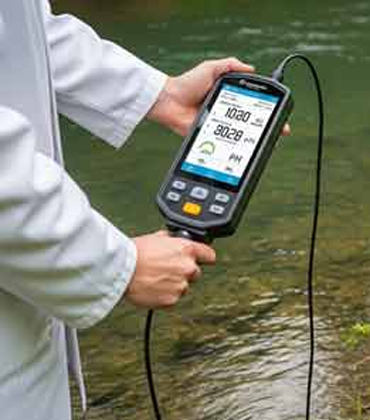
Water field data collection tools enhance monitoring accuracy, support sustainable water management, and empower stakeholders through real-time insights, AI integration, and cloud-based collaboration.
Advancing Utilities with Smart Technologies
Water field data collection tools show how this change is taking shape in daily operations. Rather than deploying field teams to take time-consuming readings, utilities now use digital systems that record and report information in real-time from source points. Flow rates, usage levels and incipient indications of leakage are available quickly and accurately, saving time and enabling staff to concentrate on corrective action instead of taking routine measurements. The result is greater efficiency in how water systems are managed and a stronger foundation for decisions that balance service delivery with environmental care.
Disturbance monitoring is making a similar impact in power management. Grids are constantly tested by weather events, fluctuating demand and equipment fatigue, and operators need a way to see those shifts as they happen. Monitoring tools highlight unusual activity, trace causes and provide data that supports faster responses. By keeping a closer watch on these signals, utilities can maintain stability, limit downtime and protect assets from avoidable strain, all of which contribute to more dependable service for customers.
In this edition of the Utilities Tech Outlook, we explore the recent developments in water field data collection tools and disturbance monitoring that are redefining how utilities operate and deliver value.
We hope this edition of the Utilities Tech Outlook helps you find the right partner for your business requirements.